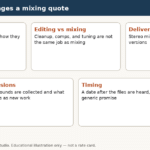
You like the direction of a mix, but the chorus still feels smaller than you imagined. “Make it bigger” describes the feeling. It does not tell your engineer whether you mean louder vocals, wider guitars, more drum impact, or a stronger contrast with the verse.
You do not need to translate your reaction into compressor settings. Useful mix revision notes connect what you hear with where it happens and what you want the listener to feel. A short, organized message can do that better than a long list of production terms.
Start with the exact mix version
Name the file you reviewed before describing changes. If several versions are circulating, a timestamp alone may point to the wrong moment.
A practical opening is: “These notes refer to SongName_Mix02.wav. Timestamps start at the beginning of that file.” Add the listening setup if it helps explain the observation: headphones, speakers, or a phone speaker, for example.
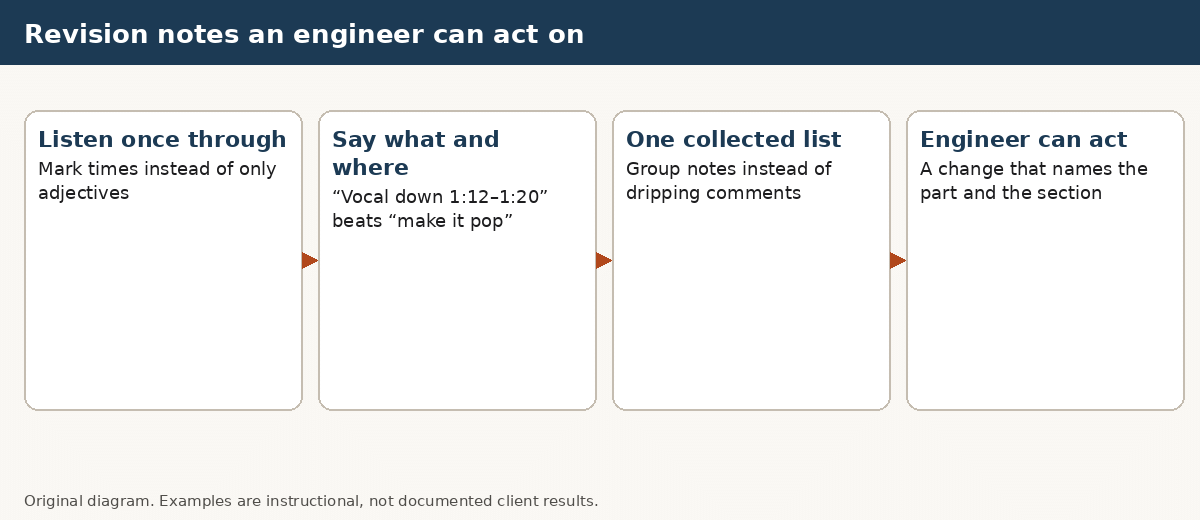
Listen through once before writing detailed notes. Then make a focused pass and check your main concerns again. This is a suggested workflow, not a required number of listens. The point is to separate a consistent concern from an impression that changes every time you replay a few seconds.
Describe the moment, the observation, and the goal
For each note, include three things:
- Location: a timestamp range, section name, or lyric cue.
- Observation: what seems too prominent, unclear, distracting, or different from your intention.
- Goal: what you would like to hear instead.
Fictional example: “1:04–1:18, first chorus: the lead vocal becomes harder to follow when the guitars enter. Please keep the words clear while preserving the guitars’ energy.”
That gives the engineer room to choose a solution. The change might involve level, automation, tone, or the competing instruments. You have identified the musical problem without pretending to know its cause. If you want vocabulary for problems such as muddy low end or over-compression, see common mixing mistakes.
If you do have a specific production request, include it. “Please remove the delay throw after the word ‘home’ at 2:12” is already clear. You do not need to make a precise note less precise.
Separate a whole-song concern from a local adjustment
“Vocals up” could mean the entire performance or one line. Say which.
Fictional whole-song note: “Across the song, I would prefer the lead vocal slightly more forward. The verses are close to the balance I want; the choruses need the most attention.”
Fictional local note: “At 0:47, the last word of the verse drops out of focus. Please make that word easier to hear without changing the rest of the verse balance.”
Also say what is working. “Keep the dry, close verse vocal” protects an important choice while you ask for more space in the chorus. Positive direction is useful information, not just a polite introduction.
Rank the changes that matter most
Mark your essential changes separately from ideas you are curious about. For example:
- Essential: make the first chorus lyrics easier to follow.
- Important: reduce the distracting delay at the end of verse two.
- Optional experiment: try a little more separation between the final chorus and the outro.
Those are example priorities. The number of changes, revision rounds, fees, and delivery timing depend on the agreement for your project. Ask what is included rather than assuming every new request falls within the original scope.
If bandmates or collaborators are contributing, consider having one person consolidate the notes. Resolve direct contradictions first, or flag them as an open decision. “One of us wants a drier vocal and one wants a longer reverb; can we discuss the intended direction?” is more useful than silently sending both instructions.
Use reference songs for a specific detail
A reference can help explain a sound that is difficult to describe, such as drum impact or the lift of a chorus.
Name the detail you mean, not just the artist. Include the song, the section, and what you want to borrow as a direction.
Fictional example: “In the reference’s second chorus, I like how the backing vocals sit behind the lead. I am referring to their depth, not asking for its brighter overall tone.”
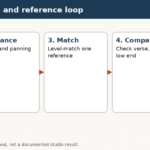
A different performance, arrangement, or recording will not become the reference simply because the mix uses similar effects. Treat the reference as a conversation aid, not a promise of an identical result. When comparing, try to keep playback loudness reasonably similar so a louder version does not become the default favorite; our home studio mixing tips explain how to level-match a reference.
Flag requests that may be more than a mix adjustment
Replacing a vocal take, adding a new instrument, changing an arrangement, or requesting an alternate version can change the work involved. Flag those requests clearly and ask whether they affect scope or timing before expecting them in the next revision.
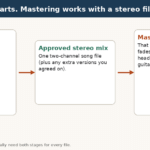
If you are unsure whether you need a mix adjustment or a mastering change, start with mixing versus mastering. Describe the concern first; the appropriate stage can be discussed from there.
A mix feedback template you can copy
Copy this structure into an email or document and fill it in for each mix version.
- Mix reviewed: exact filename or version.
- Listening setup: where you noticed the issue.
- Keep: the choices you want to preserve.
- Priority 1: timestamp or section; what you hear; desired result.
- Priority 2: timestamp or section; what you hear; desired result.
- Optional idea: clearly marked as an experiment or question.
- Scope question: new recordings, arrangement changes, or additional versions to discuss.
Before sending, read each note and ask: could someone locate this moment and understand the goal without another explanation? If not, add a timestamp, lyric cue, or short comparison. You do not need more technical language; you need a clearer target.
Keep the next review connected to the last one
When the revised mix arrives, check the agreed priorities against the correct new version. Say which issues are resolved and identify anything that still needs attention. If your creative direction has changed, say so rather than presenting it as a missed instruction.
Good feedback is not about proving the mix wrong. It is about giving the next conversation a useful starting point.
Planning a project? Explore mixing and mastering services, or send a project inquiry with your genre, number of songs and preferred timeline. Included revisions are agreed for each project before payment.